


CNC milling machines, as core equipment in modern manufacturing, come in a wide variety of types and functions. For beginners, a common question is: how to choose from such a diverse range of CNC milling machines? This article will introduce the main types of CNC milling machines and offer some suggestions on how to select the right one.
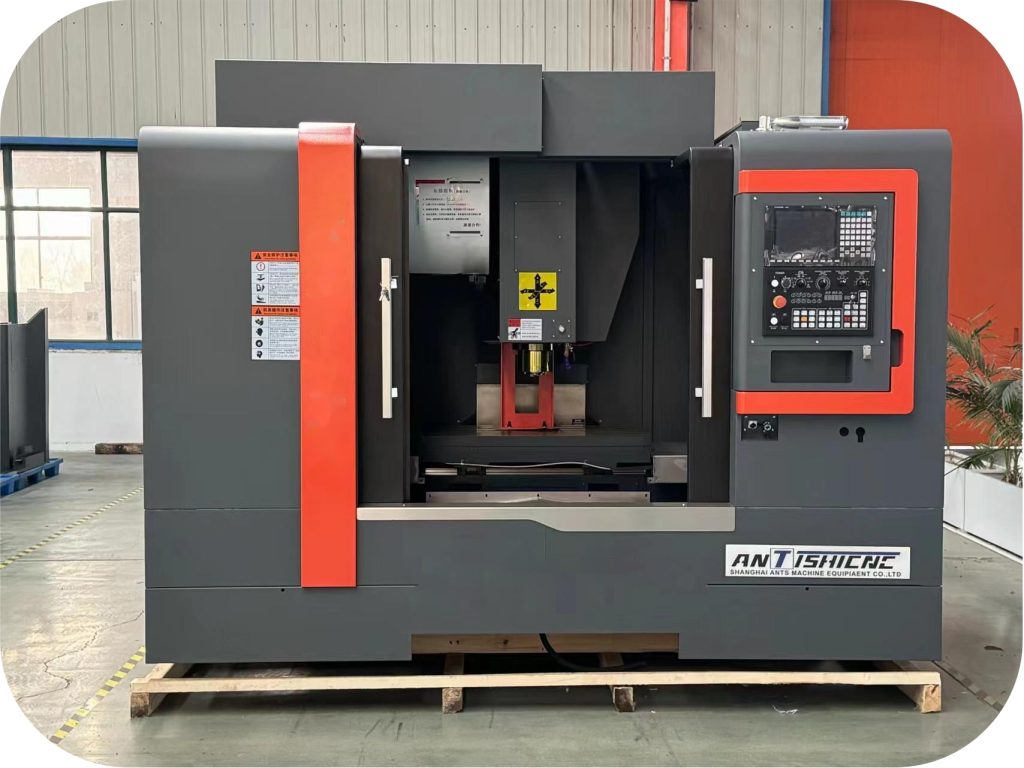
CNC milling machine core types
| Classification Dimensions | Main types | Core features and applicable scenarios |
| Main axis layout | Vertical CNC milling machine | The spindle is perpendicular to the worktable, which is the most common type and is suitable for disc, sleeve, and plate-type parts. It is easy to operate and observe. |
| Horizontal CNC milling machine | The spindle is parallel to the worktable, ensuring smooth chip removal. It is often equipped with a CNC rotary table and is suitable for multi-face machining of box-type parts. | |
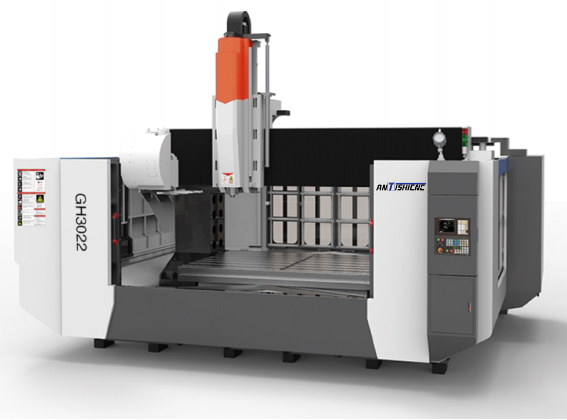
| Gantry CNC milling machine | With high rigidity and a huge worktable, it is suitable for heavy workpieces such as aircraft structural parts and large molds. | |
| Vertical and horizontal CNC milling machine | The spindle or worktable can rotate, and five-sided machining can be completed in one clamping. It is highly adaptable and suitable for complex parts. | |
| Number of control axes | Three-axis CNC milling machine | The worktable moves in the X and Y directions, and the spindle moves in the Z direction. This basic configuration can complete most planar and curved surface machining. |
| Multi-axis CNC milling machine (four-axis/five-axis) | Adding a rotary axis to a three-axis system enables the machining of extremely complex spatial curved surfaces (such as impellers and turbines), a hallmark of high-end manufacturing. | |
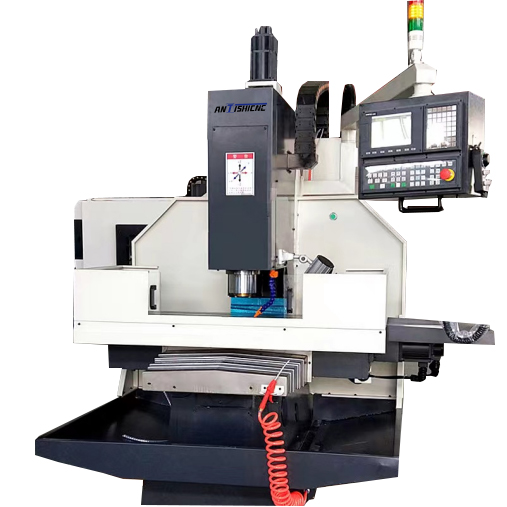
| Functional level | Economic CNC milling machine | It mostly adopts open-loop control, which is low in cost and has simplified functions, making it suitable for teaching, research and development, or the processing of general complex parts. |
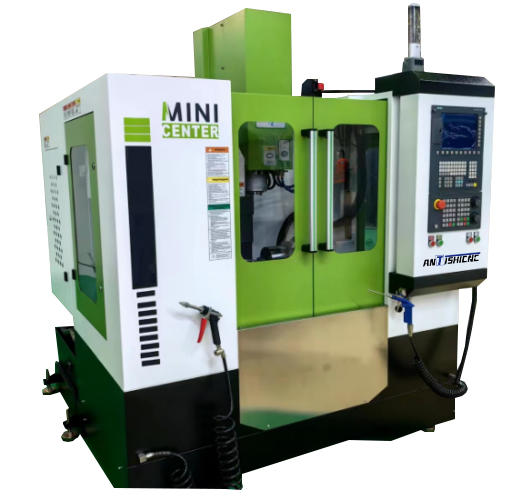
| Full-function CNC milling machine | Mainstream production equipment often adopts semi-closed-loop/closed-loop control, which is feature-rich, highly precise, and usually equipped with an automatic tool changer. | |
| High-speed CNC milling machine | With extremely high spindle speed, it pursues high efficiency and high surface quality, and is suitable for precision molds, thin-walled parts, etc. |
Image Overview
| Economic CNC milling | Machining Center | Gantry milling |
 |
 |
 |
Comparison of core parameters of different types of CNC milling machines
| characteristic | Economic CNC milling machine | Full-function CNC milling machine
(Machining Center) |
High-speed CNC milling machine |
| Number of linked axes | Three-coordinate linkage | Four-axis or higher linkage | Multi-axis linkage |
| Typical accuracy | Relatively low, meeting general needs | High (pulse equivalent is typically 0.001 mm) | Extremely high precision (up to 0.1μm in high-precision systems) |
| spindle speed | Standard speed range | Wide speed range, high power | Ultra-high speed (typically 8,000 – 40,000 rpm) |
| feed rate | Normal feed | High-speed feed | Extremely high cutting feed rate (up to 10-30 m/min) |
| Typical applications | Simple parts processing, teaching, and research and development | Mass production of precision parts for industries such as mold making, aerospace, and automobiles | High-efficiency machining of large-area curved surfaces, difficult-to-machine materials, and parts with high surface quality requirements. |
How can I choose based on my needs?
Based on the above information, you can quickly determine the right model for you by answering the following three questions:
What kind of workpiece will be machined? (Based on structure and dimensions)
For small sheet metal parts and disc-shaped parts, vertical CNC milling machines are preferred.
For box-shaped or shell-shaped parts that require multi-faceted machining, select a horizontal CNC milling machine (or a horizontal machining center).
For large and heavy workpieces, a gantry CNC milling machine must be selected.
For precision parts with complex shapes that require multi-face machining in a single setup, consider a vertical/horizontal or multi-axis machining center.
How complex is the workpiece? (Depending on the number of control axes)
Two-dimensional contours and simple three-dimensional curved surfaces → a three-axis machine tool is perfectly sufficient.
Parts with complex spatial curved surfaces (such as impellers, propellers, and precision molds) require four-axis or five-axis CNC machine tools.
What are the requirements for accuracy and efficiency? (Depending on the functional level and budget)
Limited budget, moderate precision requirements, used for prototyping or small-batch production → Economical CNC milling.
Pursuing stable precision, used for mass production, and the main productive force in the workshop → Machining Center.
Pursuing ultimate efficiency, processing difficult-to-machine materials, and requiring extremely high surface finish → High-speed type.
Hopefully, the above information will help you better understand the family tree of CNC milling machines and provide strong support for your decision-making. Shanghai Antes is a company dedicated to milling machines. We have extensive experience in milling machine manufacturing and application and can provide you with professional technical support. If you have any milling machine needs, please send an email to contact@antsmachine.com
Keywords: CNC milling machine, fully automatic milling machine, milling machine, gantry milling machine