


Many customers hold a misunderstanding about machining square workpieces: they believe square parts can only be produced by milling machines or machining centers, and lathes are only capable of turning round components.In actual operation, ordinary manual lathes can perfectly machine square and rectangular workpieces with stable performance, qualified precision, lower costs and faster lead times.
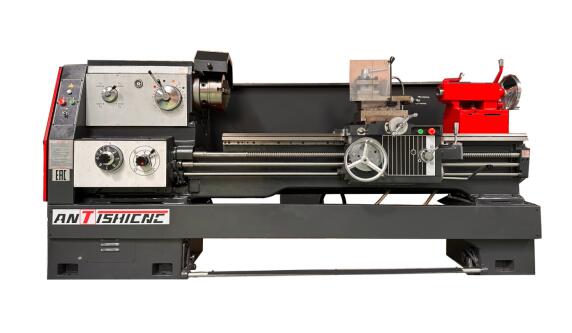
Lathes are originally designed for round rotary parts. Machining square workpieces belongs to non-circular intermittent cutting. The key does not rely on sophisticated equipment; instead, it depends entirely on reasonable clamping, rotational speed control and face-by-face machining. This method enables square workpieces to be processed with perfect squareness, accurate dimensions and stable tolerances, fully meeting export assembly requirements.
I. Three Common Clamping Methods for Machining Square Workpieces on Lathes
1. Four-jaw independent chuck (most commonly used with the highest precision)
Ideal for standard square and rectangular parts, as well as orders with high perpendicularity requirements. The four jaws are independently adjustable. First, lightly clamp the workpiece after centering it, then run at low speed and use a dial indicator to align the runout of the end face and side face, ensuring concentricity of all four sides without deflection. Machine after full clamping. Finished parts feature high squareness and low deformation.
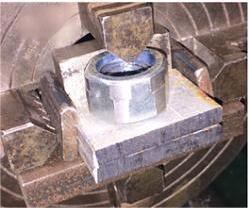
2. Three-jaw chuck with spacer blocks / soft jaws (simple and low-cost)
Suitable for small square blocks, short workpieces, and products with low precision requirements. Copper or aluminum spacer blocks are placed inside the chuck to increase the contact area, or soft jaws are used for clamping.It features fast setup, yet with moderate precision and slight workpiece offset easily occurring. It is only recommended for ordinary non-standard small parts.
3. Custom square fixture (for batch orders)
Dedicated positioning fixtures are adopted for mass production orders.The workpiece is positioned stably; one face is machined per clamping, then the workpiece is flipped for repeated processing.It delivers excellent consistency and high efficiency in mass production, ideal for steady large-volume orders.
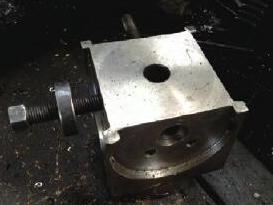
II. Standard Procedure for Machining Square Workpieces on Lathe
The whole machining principle can be summed up in four words: face-by-face turning.
First, align the workpiece. Perform rough turning on the first reference surface at a low speed to make it flat and straight. Stop the machine, rotate the workpiece by 90 degrees, re-align it based on the finished reference surface, and machine the remaining four surfaces in sequence. After rough turning, finish turning is carried out to trim dimensions, followed by chamfering and deburring.
The whole process adopts intermittent cutting. Avoid aggressive cutting and fast feeding. In this way, finished workpieces feature stable dimensions, smooth surface finish and perfect squareness at four corners.
III. Key Machining Parameters (Core for Quality Assurance)
Square turning belongs to intermittent cutting. The spindle speed must be reduced by 30%~50% compared with turning round parts, to prevent tool vibration, poor surface texture and workpiece shaking.
For steel parts, use a relatively low speed in rough turning and moderately increase the speed in finish turning; for aluminum and copper parts, a slightly higher speed is acceptable.Keep a small feed rate instead of a large one. Take a moderate cutting depth in rough turning, and leave a tiny allowance for dimension finishing in finish turning. Matched with 45° carbide cutting tools, it ensures stable cutting, longer tool service life and good finished appearance.
IV. Why It Is More Cost-Effective to Machine Square Parts on a Lathe
| Lower prices | Without using milling machines, the process cost is lower, offering more competitive quotations. |
| Faster delivery | No need to follow the production schedule of milling machines; orders can be arranged anytime without delaying the shipping schedule. |
| Stable quality | The process is mature with controllable dimensional tolerances, fewer reworks and simple after-sales service. |
| Catering to all types of orders | It is suitable for both small-batch samples and mass production orders. |
V. Summary
Square workpieces do not have to be machined on milling machines. With a manual lathe, combined with a four-jaw chuck for alignment and face-by-face intermittent turning, qualified square parts can be produced as well. Featuring compliant precision, significant cost advantages and fast delivery, this solution is highly suitable for metal processing enterprises to achieve cost-effective and stable supply.
Shanghai ANTISHICNC boasts rich experience in lathe manufacturing and export. If you have any demands for lathes or need technical guidance after purchase, please feel free to contact the Shanghai ANTISHICNC Team.
Email: contact@antsmachine.com
Website: www.antsmachine.com
Keywords: Lathe, Manual Lathe, Universal Lathe, Square Workpiece Machining on Lathe