


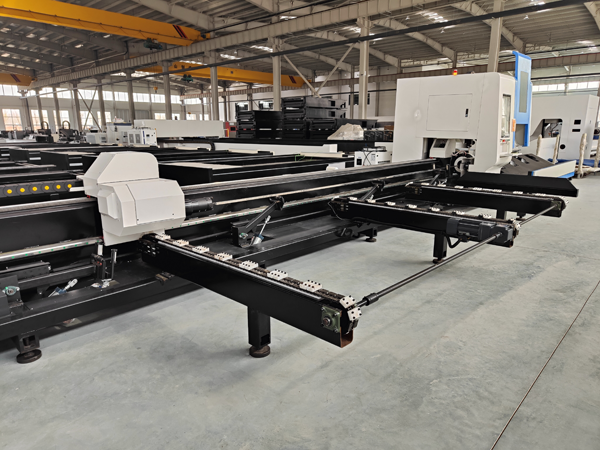
“Side-mounted feeding” and “horizontal feeding” are the two main physical structures and feeding methods of laser tube cutting machines, which determine the machine’s basic performance, processing range, and price positioning. Simply put, their core difference lies in how the tube is “grabbed” and “supported.”
Main Difference: The Principle of Clamping and Support
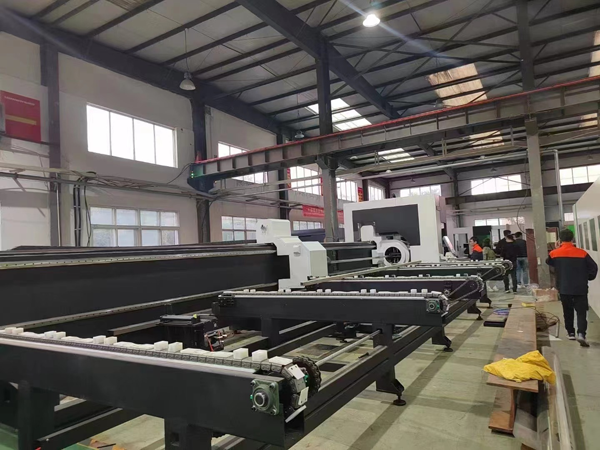
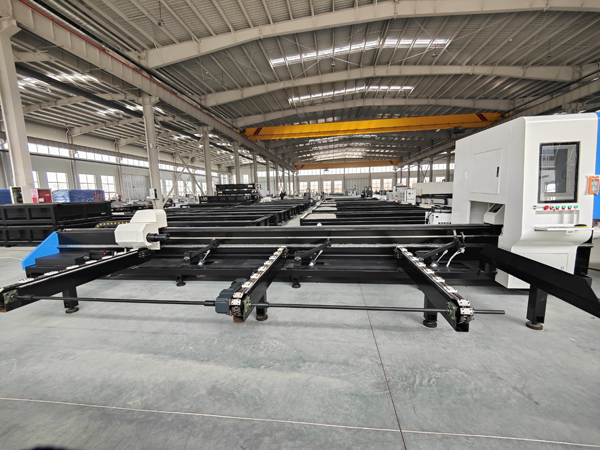
1.Side-mounted feeding (mainstream high-end configuration)
Principle: The tube is placed horizontally and clamped from the “top” or “side above” by a rotating spindle chuck at the front of the machine tool, like a strong hand “gripping” the tube from above. The rest of the tube is suspended, with a movable tailstock usually providing auxiliary support at the far end.
Keywords: Top clamping, suspended machining.
 |
 |
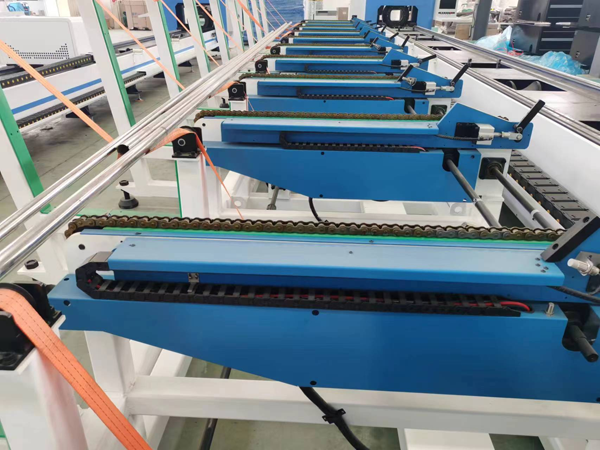
2.Horizontal feeding (traditional or economical configuration)
Principle: The tube is also placed horizontally, but it “lies” on one or more sets of support rollers or V-blocks. The clamping device (possibly a chuck or friction wheels) drives the tube to rotate from the side or bottom. The entire length of the tube is “supported” by the support below.
Keywords: Bottom support, lifting machining.
 |
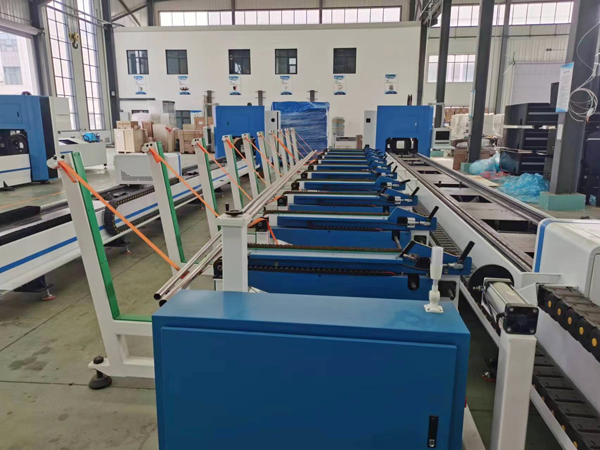 |
Detailed comparative analysis
| Comparison Dimensions | Side-mounted feeding | Horizontal Feeding |
| Gravity and Deformation | Significant advantages. The tube is “suspended,” leaving the processing section in a free state, significantly eliminating gravity-induced sagging, especially for long and thin-walled tubes, ensuring high precision throughout the process. | Inherent Defects: The middle section of long tubes tends to sink due to its own weight, causing the cutting position (especially at the top) to shift with length, affecting accuracy. |
| Cut Range | True full-circumference, no-dead-angle cutting. Because it’s clamped from the top, the lower hemisphere of the tube is fully exposed, allowing the cutting head to process any position without obstruction, including the bottom.。 | Dead Zones Exist: Bottom support rollers or V-blocks can obstruct the area below the tube, preventing cutting near the support point and requiring frequent support point repositioning, resulting in low efficiency. |
| Automatic Loading and Unloading | Height adaptability. The horizontal arrangement of tubes in the side-mounted feeder facilitates automated, continuous gripping and loading by robotic arms or servo systems, making it an ideal structure for “lights-out factories.” | Relatively Complex: Automated solutions typically require additional lifting or transfer mechanisms to move the tube from the rack to the support rollers, making the system more complex. |
| Chip Removal and Cleaning | Excellent. Molten slag and dust generated during cutting fall directly downwards, preventing accumulation on the tube or clamps, and are easily collected by the chip removal system below, resulting in a cleaner working chamber. | Poor Performance: Molten slag easily falls and accumulates on the bottom support blocks and guide rails, requiring frequent cleaning; otherwise, it will affect accuracy and equipment lifespan. |
| Equipment Rigidity and Cost | Complex structure, high cost. Requires a very robust cantilevered spindle box and bed to withstand the torque during cutting, demanding high mechanical design and manufacturing standards, making it a high-end configuration. | Relatively Simple Structure, Low Cost: Utilizing mature bed and support structures, manufacturing costs are low, making it an economical or entry-level configuration. |
| Applicable Scenarios | High precision, complex processes, mass production.
• Automotive exhaust systems and chassis • Precision medical devices and fitness equipment • Building curtain walls and complex furniture • Precision machining of long tubing (>6 meters) |
Suitable for general accuracy requirements, simple processes, small batch production, or startups.
• Fences, stair railings • Simple shelving, door and window profiles • Ordinary cutting of short tubes (<3 meters) |
In today’s manufacturing trend towards high precision, high efficiency, and full automation, side-mounted feeding has become the absolute mainstream and standard configuration for mid-to-high-end laser tube cutting machines. Unless the budget is extremely limited or the processing requirements are very simple, side-mounted feeding is a more future-oriented option offering greater process flexibility when purchasing new equipment. Horizontal feeding is more commonly seen in the continuation of older mechanical structures or in specific low-cost markets.
If you also need a suitable fully automatic laser tube cutting machine for metal, please contact Shanghai ANTISHICNC. We are a seasoned supplier of metal machining equipment with extensive experience in mechanical equipment manufacturing and application, and can provide you with professional technical support.
Please send an email to contact@antsmachine.com;
For more product information, please visit: https://www.antsmachine.com/