


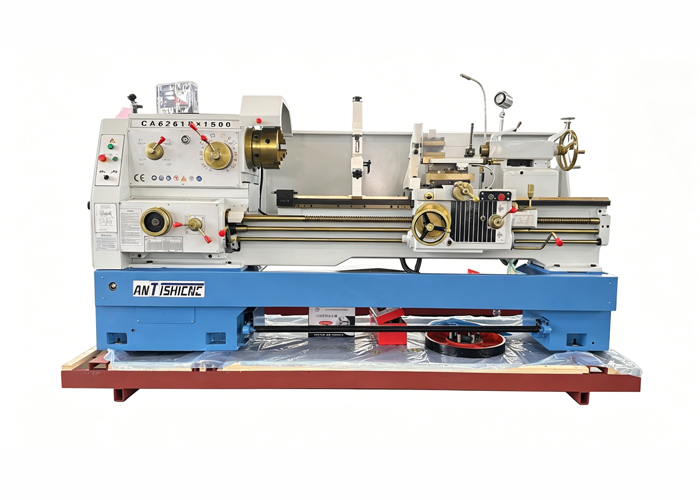
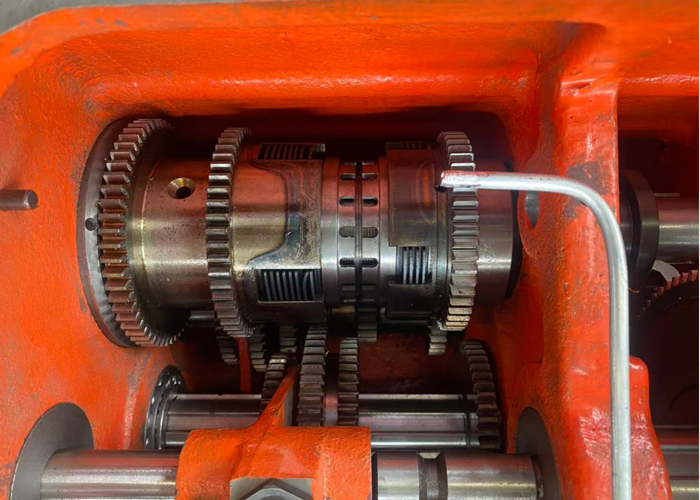
Universal lathes are the most widely used general-purpose equipment in machining. As a core component of the spindle drive system, the clutch directly determines the equipment’s operational stability, processing efficiency and operational safety. It adopts a bidirectional multi-plate friction structure, mainly used for spindle start/stop, direction switching, torque transmission and overload protection, making it a key device ensuring reliable lathe operation.
During our after-sales support, some customers encounter clutch-related issues. The ANTISHICNC engineering team will list common failures, causes and solutions for manual lathe clutches below, to keep your equipment in good working condition at all times.
I. Main Functions of the Clutch
| Controls spindle start and stop |
| Quickly connects and disconnects power while the motor runs continuously, simplifying operation and reducing motor impact. |
| Enables spindle forward and reverse switching |
| Forward rotation for conventional cutting; reverse rotation for tool retraction and chip removal. Switching is fast and stable. |
| Transmits cutting torque steadily |
| Power is transmitted through pressed friction discs, ensuring strong cutting performance, no speed loss, and stable precision. |
| Provides equipment overload safety protection |
| Automatically slips during tool collision, stalling, or overload to prevent damage to gears, spindle, and motor. |
| Ensures smooth engagement and reduces shock |
| Soft start, low vibration, protects the transmission mechanism, and extends equipment service life. |
II. Common Failures, Causes and Solutions
1.Clutch slipping, weak cutting, easy stalling
Causes: Worn or oil-contaminated friction discs; improper loose adjustment; worn operating mechanism.
Solutions: Clean oil from friction discs; properly tighten the compression nut; replace worn friction discs; overhaul the linkage mechanism.
2.Overheating, smoking, burning smell
Causes: Over-adjusted tightness, incomplete disengagement; deformed friction discs; long-term overload operation.
Solutions: Properly loosen the clearance; replace warped or burned friction discs; avoid overload cutting; improve lubrication and heat dissipation.
3.Spindle cannot stop completely, incomplete disengagement
Causes: Over-adjusted tightness; burned or stuck friction discs; spline jamming; failed brake band.
Solutions: Readjust to normal clearance; clean or replace stuck friction discs; remove burrs on splines; adjust or replace the brake band.
4.Only forward or reverse rotation works
Causes: Damaged or missing friction discs on one side; loose one-side adjustment; mechanism jamming.
Solutions: Inspect and replenish / replace one-side friction discs; readjust clamping force; repair jammed operating parts.
5.Heavy engagement shock, gear shifting clash, strong vibration
Causes: Over-adjusted tightness; hardened friction discs; uncoordinated brake matching.
Solutions: Loosen properly for smoother engagement; replace aged friction discs; check and synchronize the brake mechanism.
III. Daily Maintenance Points
1.Regularly inspect and adjust clutch clearance to ensure smooth start and quick stop.
2.Keep friction discs dry and clean; strictly prohibit oil contamination on friction surfaces.
3.Replace the full set of friction discs immediately when wear exceeds limits; do not mix old and new discs.
4.Lubricate the operating mechanism regularly to ensure flexible movement without jamming.
IV. Conclusion
The clutch is the power control core of a universal lathe, integrating transmission, control and safety protection functions. Proper daily inspection, precise adjustment and timely maintenance can greatly reduce equipment failure rate, extend service life, improve production efficiency and processing safety, providing a strong guarantee for stable production.
Shanghai ANTISHICNC has rich experience in lathe manufacturing and export. If you have any demand for lathes or need technical support after purchase, please feel free to contact the ANTISHICNC team.
Email: contact@antsmachine.com
Website: www.antsmachine.com
Keywords: lathe, manual lathe, universal lathe, common lathe failures